
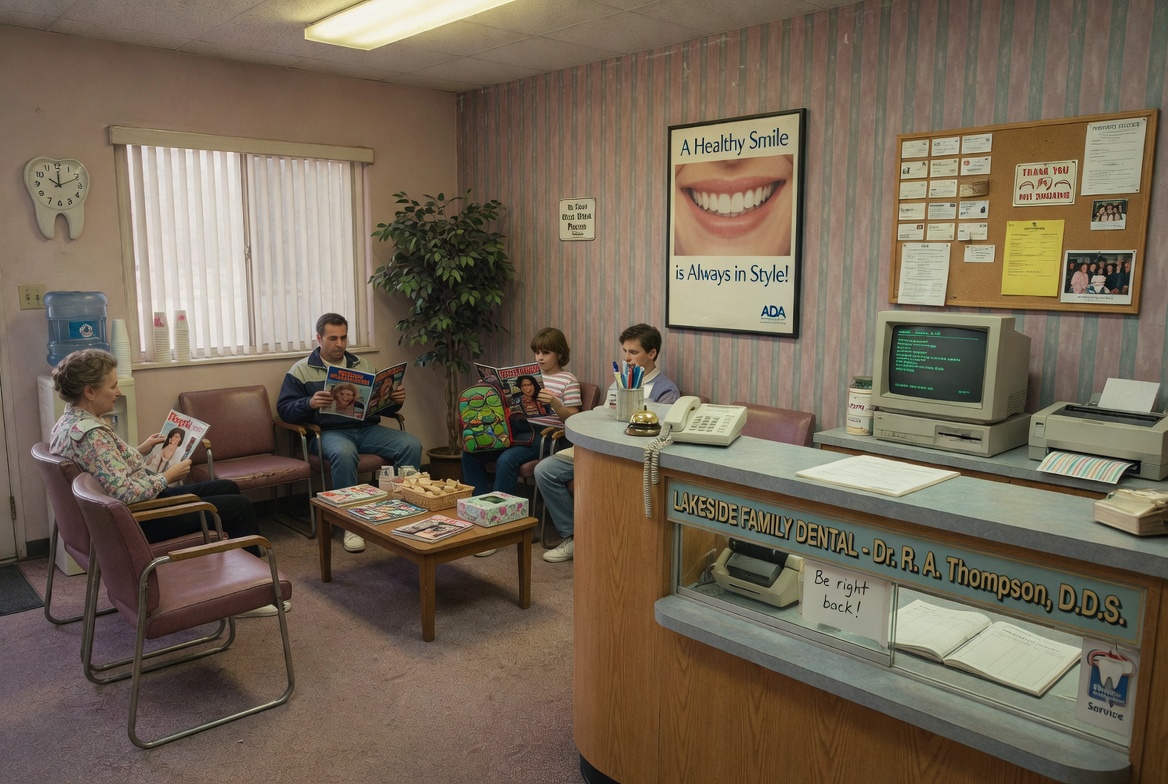
The phone tree belongs in the same category as paper charts and flip phones: technology that once felt modern and now quietly drains revenue.
[Executive Summary]
- Dental offices lose 35% of inbound calls to abandonment or voicemail, with 87% of those patients never calling back.
- 65% of callers prefer a live staff member over any automated menu; 89% want a real person when contacting a healthcare practice.
- Conversational AI systems (yes, that includes CRTX) that answer like a human convert 35-50% more calls into booked appointments than traditional phone trees.
[What it means for practice owners]
- New-patient acquisition stalls when the first contact fails; each missed call represents $800–$2,000 in potential lifetime revenue.
- Elective procedures like implants and Invisalign suffer most because anxious callers need immediate reassurance, not options to press.
- Front-desk teams drown in routine calls while high-value inquiries slip away, inflating overhead and lowering treatment-acceptance rates.
- DSOs scaling locations face amplified losses; one missed call per location per day compounds into six-figure annual gaps.
- Satisfaction scores make poor phone systems a quiet revenue loser.
[Story]
The phone rings. A patient in pain or a parent needing an urgent cleaning for their kid dials your number. What greets them? A recorded voice listing 4 options, then 4 more, then a hold that lasts longer than their patience.
This is not a minor annoyance. It is the single largest silent leak in most dental practices today.
Technology from last century – literally
Traditional phone trees, built for last-century call volumes, force callers through rigid menus they did not ask for. Research across thousands of dental calls shows abandonment rates hit 35% in practices still using them. Healthcare call centers average 7%. Dental is worse because patients call when something hurts or when they finally decided to fix that smile. They want help now.
60% hang up after one minute on hold.
Of those who reach voicemail, 87% never try again.
They simply dial the next practice on their list.
In a market where new-patient lifetime value sits between $800 and $2,000, that single dropped call is not abstract. It is cash that walked.
Practices that still rely on these systems defend them with the usual logic: “It routes calls efficiently.”
The data disagrees.
Conversion from inbound calls to booked appointments hovers at 15-25% with menus. Patients over 50, who drive the majority of restorative and implant revenue, abandon at even higher rates. They simply want to speak to someone who sounds like they care.
The contrast is stark when you listen to what actually happens in practices that killed the tree.
Conversational AI receptionists answer every call in under 2 seconds with a natural voice. No menus. No “press one for appointments.” The system understands spoken requests, checks the schedule in real time, books the slot, confirms insurance basics if asked, and only transfers complex cases to a human with context already gathered. Practices using these tools report 45-60% conversion rates. First-call booking jumps to 60-80%. One multi-location group saw revenue rise 12% and cut front-desk headcount 17% while answering 90% of calls.
The economics are straightforward.
A traditional receptionist costs $50,000–$65,000 per year including benefits. An AI system that handles unlimited simultaneous calls runs a few hundred dollars a month. The real savings come from captured revenue. Practices recover $8,000–$15,000 in extra monthly bookings. Missed-call losses estimated at $102,000 annually per office disappear almost overnight.
Front-desk overload eases.
Staff stop answering the same routine questions 50X a day. They spend time on treatment planning, financial arrangements, and the human conversations that close cases. Treatment acceptance for cosmetics and implants improves because the first impression is calm competence instead of robotic frustration.
This is not theory.
Real dental offices using conversational voice agents book after-hours emergencies that used to go to competitors. They capture Monday-morning spikes when call volume jumps 40%. They reduce no-shows by confirming appointments conversationally instead of through brittle reminder trees. The numbers add up fast.
The old defense that “patients will wait” no longer holds.
Mobile devices and instant alternatives changed expectations. A parent searching for a pediatric dentist at 7 p.m. will not navigate your menu. They will find the practice that answers like a person and books the appointment while they are still on the line.
DSOs scaling multiple locations feel this pressure hardest. Centralized call centers with layered menus compound the problem. Patients expect the same seamless experience whether they call the flagship office or the new satellite. When one location drops calls, the entire brand reputation takes the hit.
Poor phone response shows up in patient-experience surveys that affect online ratings. Practices that fix this quietly gain an edge competitors cannot see until the numbers arrive.
None of this requires replacing any human on the team.
The smartest operators keep live staff for high-touch conversations while letting technology handle the predictable 70% of routine calls. The AI gathers details, books slots, verifies basics, and hands off only what truly needs empathy or clinical judgment. Staff become more valuable, not less.
The hidden cost of keeping the old system is not just lost calls. It is lost trust. A patient who hangs up frustrated already decided your practice is harder to deal with than the one down the street. That decision happens before they ever see your operatory or meet your hygienist.
Forward-looking owners audit their call logs for the last thirty days.
They count abandoned calls, voicemail drop-offs, and average hold times. They test the experience themselves at 6 p.m. on a Friday. The gap between what they thought was happening and what callers actually encounter is usually wider than expected.
The fix is no longer expensive or experimental.
Conversational systems integrate with existing practice-management software. They learn your schedule, your insurance rules, your preferred phrasing. They improve over time. Practices that switched report payback in two to three months through higher bookings alone.
The phone tree belongs in the same category as paper charts and flip phones: technology that once felt modern and now quietly drains revenue.
Patients do not call to navigate menus. They call because they need help. The practice that gives it to them first wins the appointment, the relationship, and the lifetime value.
Kill the tree. Replace it with something that sounds and acts like the caring team you already employ. Your next new patient is already dialing. Make sure they reach a voice that helps instead of one that makes them choose someone else.