
[Story Summary]
- YouTube has officially become the dominant U.S. media platform, generating over $60 billion in total 2025 revenue and capturing a record 12.7% share of all television viewing, surpassing Netflix and legacy broadcast networks.
- The platform's growth signals a shift in consumer confidence; as more users move toward ad-supported streaming for "how-to" and educational content, local businesses can maintain high visibility at a lower cost-of-entry, protecting consumer purchasing power from being eroded by high-priced traditional media.
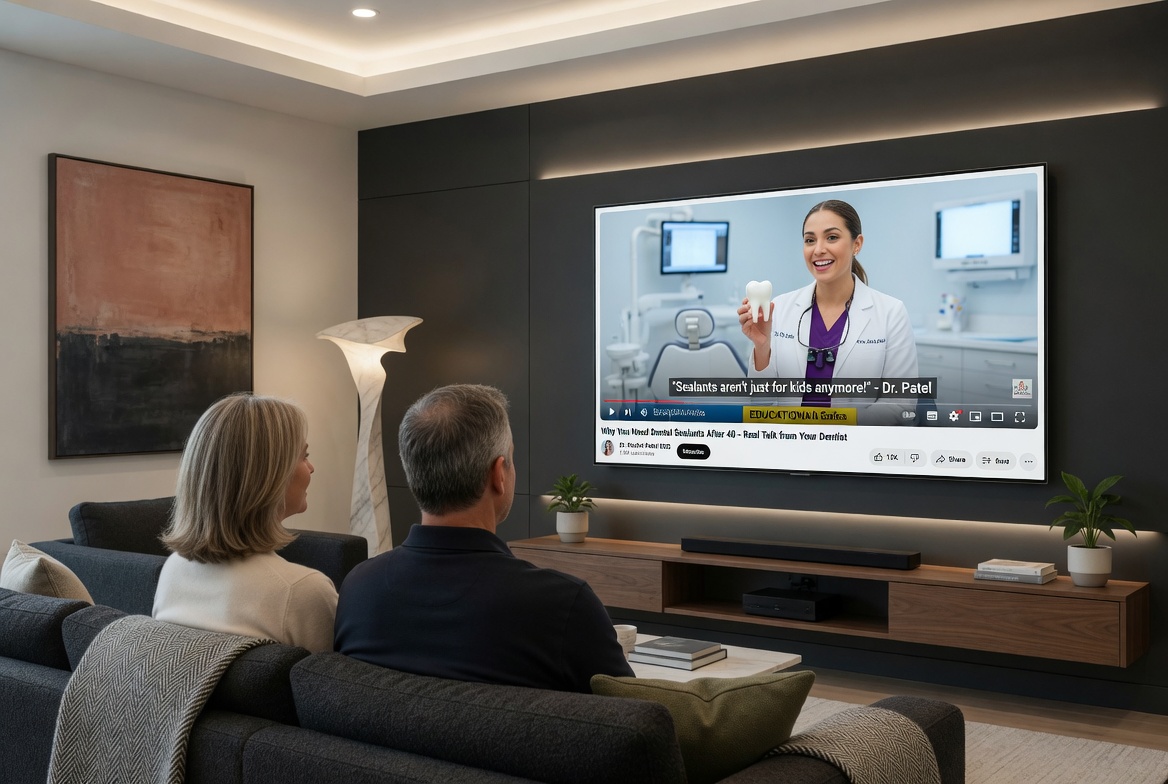
- For the healthcare sector, this shift marks the "death of local cable" as the primary video acquisition channel. DSOs and independent practices now have access to high-production, long-form video targeting that builds the "clinical trust" necessary for high-ticket elective procedures, while bypassing the rising saturation and fatigue currently seen on Meta’s platforms.
[What it means for practice owners]
- Shift from Transactional to Educational ROI: Unlike the "scroll-past" nature of Instagram, YouTube’s dominance in the living room allows practices to run 2-to-3-minute patient testimonials or procedure explainers. This format is significantly more effective at converting high-consideration cases, such as full-arch implants or full-mouth rehabilitations, where "trust-building" is the primary barrier to sale.
- Hyper-Local Precision: Practice owners can now "geo-fence" their high-intent neighbors with TV-quality commercials for a fraction of the cost of a local news spot. With CPMs ranging from $6 to $12, owners can achieve dominant brand awareness within a 10-mile radius of their office for less than the cost of a single direct-mail campaign.
- Diversification Advantage: Moving a portion of the marketing budget to YouTube Shorts and long-form content acts as a hedge against Meta’s fluctuating ad costs and declining engagement. By capturing the 12.7% of "TV time" that YouTube now controls, practices can stay top-of-mind for discretionary cosmetic work even if broader economic conditions tighten.
[Story]
YouTube’s Quiet Conquest of the Living Room
For years, television executives dismissed YouTube as the place where teenagers watched cat videos. No longer. In 2025, the Google-owned platform generated $40.4 billion in advertising revenue, eclipsing the combined ad sales of Disney, NBCUniversal, Paramount, and Warner Bros. Discovery, according to MoffettNathanson estimates. At the same time, Nielsen data showed YouTube capturing 12.7% of all U.S. television viewing minutes in December– more than Netflix’s 9.0% and far ahead of any legacy broadcaster. The shift is structural: streaming now accounts for 47.5% of total TV use, and YouTube is the single biggest slice of that pie.
The numbers tell only part of the story. YouTube’s growth has been turbocharged by its expansion onto big screens. Families no longer huddle around laptops; they stream long-form documentaries, how-to tutorials, and unboxing videos directly to living-room TVs. Alphabet reported total YouTube revenue (ads plus subscriptions) exceeded $60 billion last year, outpacing Netflix’s $45.2 billion. Chief executive Sundar Pichai highlighted the platform’s “fantastic year,” noting that YouTube TV and Premium tiers now serve more than 325 million paid subscribers across Google services.
Why Advertisers Are Moving Money
Traditional television advertising once commanded premium rates because it reached audiences passively on the couch. YouTube now delivers the same passive, big-screen experience with one decisive advantage: targeting. Advertisers can select viewers by zip code, age, interests, and even search history. A local dental practice in Sarasota can serve a 30-second video about same-day implants to households within a 15-mile radius who recently watched oral-health content. The cost per thousand impressions typically ranges from $6 to $12 – often lower than comparable Meta placements – while the average cost per view remains competitive with linear TV remnants.
A Different Kind of Social Reach
Meta’s platforms – Facebook and Instagram – still excel at rapid, interest-based targeting and quick conversions. Their average return on ad spend for direct-response campaigns hovers around 4X, according to 2025 benchmarks. Yet marketers increasingly complain of audience fatigue and rising costs as Meta’s algorithm favors short, high-engagement Reels over deeper storytelling. YouTube’s strength lies in the consideration and trust-building stages. A 60-second patient testimonial or a time-lapse of Invisalign results can run in the middle of a cooking video, reaching viewers who are relaxed and receptive rather than scrolling past ads in a feed.
Data from Kantar’s 2025 study of YouTube Creator Ads on Shorts showed an 8.8% lift in purchase intent, which 2.9X higher than comparable campaigns on competing short-form platforms. For high-consideration purchases such as elective dental work, that sustained attention matters. YouTube also offers TrueView and non-skippable formats that let advertisers pay only when viewers watch at least 30 seconds, reducing wasted spend.
The Local Advantage
Location-based businesses have been the biggest beneficiaries of this evolution. Google’s location-targeting tools – already refined through Search and Maps – now extend seamlessly to video. Dental practices, med-spas and specialty clinics can layer geographic radius targeting on top of demographic and behavioral signals. Early adopters report patient-acquisition costs 20-30% lower than traditional local-cable or Meta campaigns, according to agency benchmarks. Shorts, the platform’s vertical-video product, further amplify reach; consistent posting has been shown to accelerate channel growth by 41% and drive traffic to longer educational videos that convert browsers into appointment bookers.
What Comes Next
Industry watchers expect continued migration of television dollars into YouTube. MoffettNathanson projects the platform’s U.S. ad revenue per streaming hour already exceeds Roku’s, and the gap is widening. As political-ad spending normalizes post-2024 election cycle, brands in healthcare, retail and services are reallocating budgets toward measurable, localized video. YouTube’s recent deals to carry major live events, including the Oscars starting in 2029, only tighten its grip on the living-room screen.
The broader implication is clear: the advertising landscape has fragmented, but YouTube has consolidated the pieces. It is no longer an add-on channel. It is the channel where consumers discover, evaluate and decide – especially when the purchase is local, personal and discretionary.