
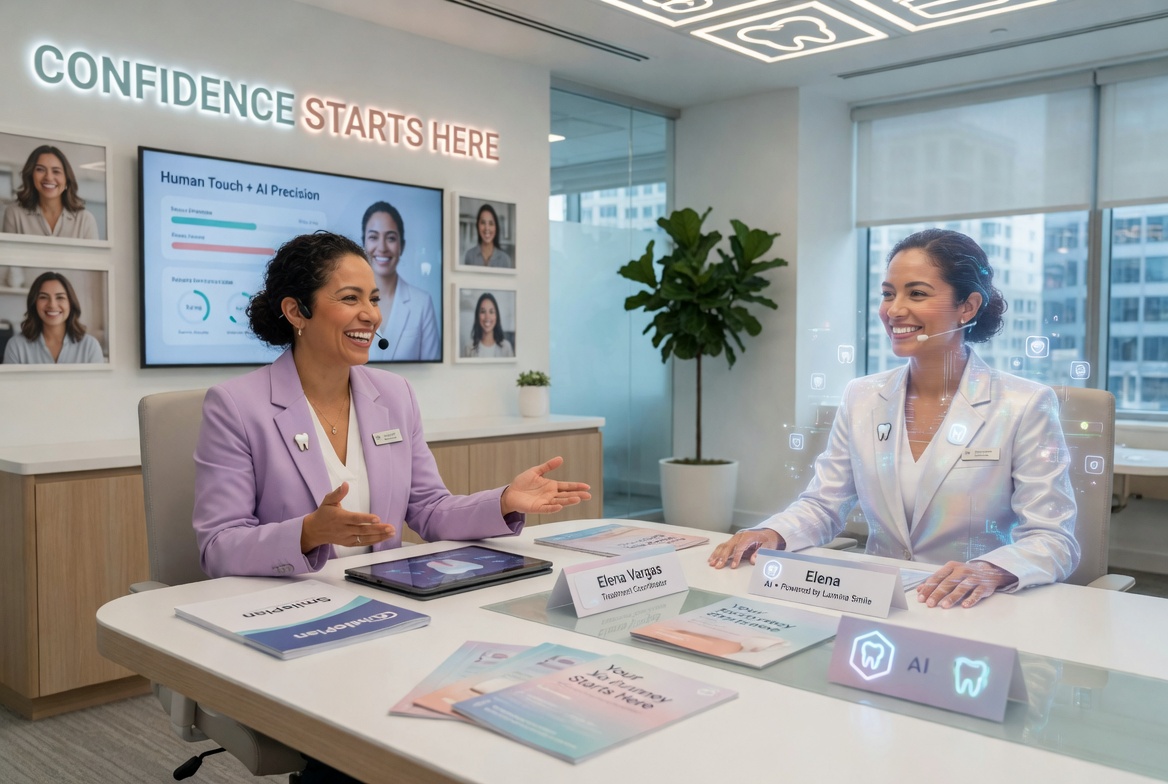
[Story Summary]
- Forward-thinking practices are shifting to a system-first model where AI manages immediate, 24/7 availability while human teams are reserved exclusively for building trust and closing high-value cases.
- As high-ticket procedures require greater financial scrutiny, consumer behavior has evolved; prospective patients behave like cautious, impatient buyers whose spending confidence is fragile and highly dependent on receiving instant certainty during their initial digital search.
- This shift directly impacts dental practice management by establishing a new standard for lead management, forcing a departure from traditional human-only front desks to prevent high-value elective, cosmetic, and implant pipelines from leaking to faster competitors.
[What it means for practice owners]
- Immediate Impact on Elective Case Conversion: Practice economics for big-ticket treatments (e.g., $4,000 Invisalign or $6,000 implants) suffer not from lack of consumer demand, but from operational latency. Cautious buyers abandon slow-responding practices instantly, making immediate automation critical to capturing elective revenue.
- Front-Desk Bandwidth Preservation: Implementing AI to manage the front edge of the sales funnel insulates your office staff from impossible multitasking – such as trying to qualify web leads while simultaneously checking in patients, handling insurance billing, and managing room turnovers.
- Transition to "Human-Precise" Operations: Moving to a hybrid model ensures that your highest-paid, most empathetic human assets (treatment coordinators and dentists) are deployed precisely when the consumer is ready for a trust-building conversation, rather than wasting time chasing cold or unverified inquiries.
[Story]
Most practices still believe the sale starts when a person talks to the patient.
That used to be mostly true.
- A call came in.
- A form was submitted.
- A patient asked about implants, Invisalign, cosmetic dentistry, or a broken tooth.
The front desk answered.
- Or called back.
- Or left a voicemail.
- Or got to it after the morning rush.
That was the old model.
It worked because patients waited.
- They called one office.
- They left one message.
- They gave the practice time.
That patient is disappearing.
- Not because patients stopped wanting care.
- Not because implants stopped mattering.
- Not because Invisalign stopped being desirable.
- Not because cosmetic dentistry lost emotional value.
The demand is still there. The patience is gone.
A cautious buyer does not behave like a loyal patient.
A person asking about a $4,000 Invisalign case, a $6,000 implant, or a full-mouth treatment plan is not just looking for a dentist.
They are looking for certainty.
- Can I afford this?
- Will this hurt?
- Can I trust this office?
- How soon can I be seen?
- Will someone explain my options without making me feel stupid?
That search often starts after hours.
- It starts from the couch.
- In a car.
- After a spouse says, “You should finally get that looked at.”
- After a tooth cracks at dinner.
- After someone sees their smile in a photo and quietly decides they are ready.
That moment is fragile.
The old practice model was not built for fragile moments.
- It was built for office hours.
- It was built around the assumption that demand appears when the team is available.
That is the dangerous part.
The practice is not losing revenue because the team does not care.
It is losing revenue because the system depends on humans being available at the exact moment demand appears.
And humans are not built for that.
Your best front desk person cannot answer every missed call, qualify every web form, respond to every financing question, follow up with every implant lead, text every stalled Invisalign inquiry, and do it all in seconds.
- Especially while checking patients in.
- Especially while handling insurance.
- Especially while dealing with a hygienist running behind, a doctor needing a room, and an existing patient upset about a bill.
The problem is not effort.
The problem is timing.
Most offices misdiagnose this.
They think they need more leads.
Sometimes they do.
But often, the leak is not at the top of the funnel.
It is in the gap between interest and trust.
- A patient fills out a form about implants at 8:47 p.m.
- No one responds until 9:32 the next morning.
- By then, the patient has already called another office.
- Or cooled off.
- Or decided it is too expensive.
- Or told themselves they will deal with it later.
The lead was not bad.
The system was too slow for the buyer.
A patient asks whether Invisalign financing is available.
The office calls back once, leaves a voicemail, and moves on.
The team thinks the patient was not serious.
Maybe.
Or maybe the patient was serious enough to ask the first question, but not confident enough to chase the answer.
Interest is not the same as commitment.
That is where a lot of practices get fooled.
They expect patients to act like buyers before the practice has created enough trust for them to buy.
The new model has to separate two jobs.
- Machines should protect demand.
- People should build trust.
That is the Human-AI Hybrid Sales Playbook.
AI should not replace the caring dentist.
- It should not replace the consult.
- It should not replace judgment.
- It should not replace the moment when a skilled treatment coordinator explains the path forward.
That is where humans win.
But AI can handle the fragile front edge.
- Answer after-hours inquiries.
- Respond to web forms in seconds.
- Ask the first qualifying questions.
- Find out whether the patient wants implants, emergency care, Invisalign, cosmetic dentistry, or something else.
- Collect the basic details.
- Explain next steps.
- Keep the conversation alive.
- Bring a person in when trust, judgment, or sensitivity is required.
That is not replacing people.
That is protecting them from being forced to do impossible work.
The human should enter when the conversation is worth human time.
- Not after the lead has gone cold.
- Not after three missed calls.
- Not after the patient has already picked another office.
This is the operating shift.
The old model was human-first, system-second.
The new model is system-first, human-precise.
That does not mean cold.
It means disciplined.
A practice should know which inquiries need instant automation and which need a person quickly.
- Emergency pain needs speed.
- Implants need qualification and trust.
- Invisalign needs affordability and timing.
- Cosmetic dentistry needs emotional confidence.
- Existing patients need recognition and care.
- Financing questions need a careful handoff.
Not every inquiry is the same.
A smart sales system treats them differently.
The mistake is thinking AI is the strategy.
It is not.
AI is just the coverage layer.
The strategy is deciding where machines are better and where humans are irreplaceable.
Machines are better at availability.
- They do not get tired.
- They do not forget.
- They do not leave the form until tomorrow.
- They do not stop after one follow-up.
- They do not get pulled into a room turnover.
People are better at trust.
- They hear hesitation.
- They calm fear.
- They explain tradeoffs.
- They make the patient feel safe.
- They help someone believe the treatment is worth doing.
A practice that uses people for everything will miss demand.
A practice that uses machines for everything will lose trust.
The winner is the hybrid.
Not because it sounds modern.
Because it matches how patients actually buy now.
- Patients want speed before trust.
- Then trust before treatment.
That sequence matters.
If the practice is slow at the beginning, the human may never get the chance to be trusted.
That is the hidden cost.
Not just missed calls.
Missed moments.
Missed timing.
Missed intent.
Missed patients who were interested enough to raise their hand, but not confident enough to wait.
That is especially true in elective dentistry.
- The implant patient is often nervous.
- The cosmetic patient is often self-conscious.
- The Invisalign patient is often comparing.
- The emergency patient is often scared.
None of them want to be ignored.
But most practices are not ignoring them intentionally.
They are just running a human-only system in a world where demand shows up 24/7.
That is the new reality.
The caring practice still wins.
But only if it gets into the conversation fast enough for caring to matter.