
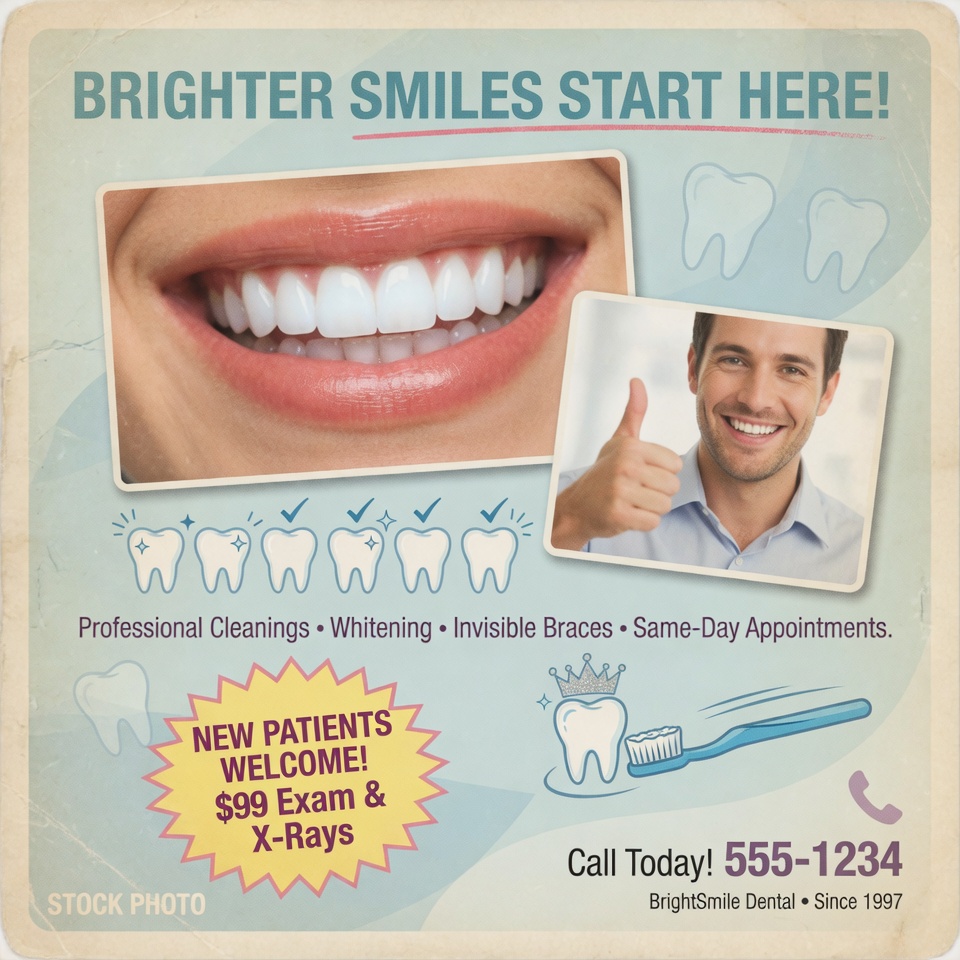
Generic dental content is no longer harmless. It is making practices invisible to patients, platforms, and the AI systems deciding who gets attention.
[The Executive Whisper]
Most practices think content is decoration.
A few team photos.
A few stock images.
A few generic posts about cleanings, implants, Invisalign, whitening, or “smile confidence.”
That used to be enough to look active.
It is not enough to win anymore.
The quiet shift is this:
- Authentic practice content has become a performance asset.
- Not branding.
- Not social filler.
- Not something to do when the schedule is slow.
Performance.
The practices getting hurt online are often not losing because their offer is weak. They are losing because the market cannot see anything specific enough to trust.
- Their ads look like every other dental ad.
- Their social media looks like every other dental page.
- Their website feels like it could belong to any office in any city.
- Their videos say nothing a patient has not already heard.
That creates a problem in both organic and paid media.
Organically, patients are looking for proof. They want to know who the doctor is, what the office feels like, how the team communicates, what kinds of patients the practice helps, and whether the experience feels safe.
Paid media has the same problem, just faster.
Google, YouTube, and Meta increasingly depend on creative signals to understand what an ad is, who should see it, and whether people care.
When a practice feeds those systems generic creative, the systems have very little to work with.
- A stock photo of a smiling patient does not prove anything.
- A templated implant graphic does not separate the practice.
- A caption that sounds like every other office does not create trust.
The hidden cost is not just lower engagement.
It is lower conversion.
Patients do not choose a practice because it claims to offer implants.
They choose because they believe this doctor, this team, and this office can help them.
That belief comes from evidence.
- Real photos.
- Real doctors.
- Real team members.
- Real explanations.
- Real patient questions.
- Real before-and-after context, used with proper consent.
- Real videos that show how the practice thinks and how it treats people.
This is why some smaller practices can outperform larger competitors online.
- They look human.
- They look specific.
- They look knowable.
- They give the patient something to evaluate beyond price, proximity, and insurance.
The old model treated creative as packaging.
The new model treats creative as proof.
That is the secret most practices are missing.
The practice is no longer just advertising the treatment.
The practice is the treatment signal.
If patients cannot see what makes the office real, they assume it is interchangeable.
And interchangeable practices compete on price, convenience, and whatever the next ad says.
That is a bad place to be.