
[The Deeper Dive]
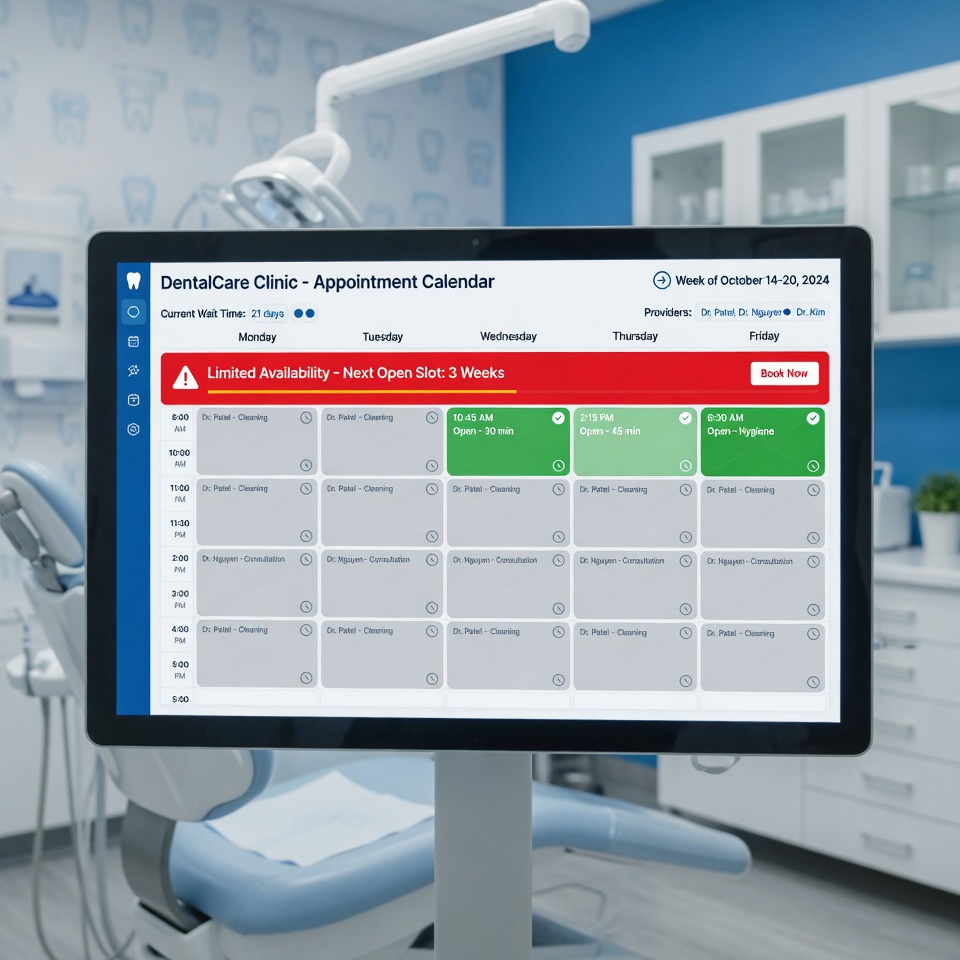
If a qualified patient reaches out over the weekend and the office cannot offer a reasonable appointment soon, the practice is not converting demand. It is creating friction.
These patients are not always loyal referral patients.
They are often shoppers.
They have choices.
They do not need to wait.
If the calendar does not give them a path forward, they will keep looking.
The real insight:
Some practices should not advertise when their calendar is too tight.
If the coming week has no serious availability, paid advertising may simply create wasted demand.
The harsh takeaway:
If you do not have enough appointment availability in the coming week, stop advertising until the calendar can absorb new patients.
Advertising without availability is not growth.
It is leakage.
Industry numbers line up. Roughly 30-45% of dental inquiries arrive outside standard business hours, including evenings and weekends. New-patient conversion from calls falls below 10% when slots are scarce. Flexible scheduling correlates directly with higher booking rates. Practices that restrict options to traditional hours lose the very patients actively searching right now.
Yet many owners still treat the schedule as an afterthought.
They block time for existing patients, emergencies, and hygiene recalls.
They leave little room for the high-value new-patient consults that actually move the revenue needle.
When the weekend shopper calls and hears “the next opening is three weeks from Tuesday,” the sale ends before it starts.
The patient does not complain.
They simply book somewhere else.
The hidden cost shows up quietly.
Ad spend stays the same.
Patient acquisition cost climbs.
Chair time sits idle.
Treatment acceptance for implants or cosmetic cases drops because the first impression was friction instead of ease.