
The platforms are learning from what your practice sends back. Weak signals may become the new hidden drag on growth.
Most dental practices still treat advertising as a contained transaction. Money goes in, attention and leads come out, and the rest of the practice’s visibility carries on under separate rules.
The platforms no longer see it that way.
Their current ad systems are built to extract ongoing lessons from every creative choice, every engagement, and every recorded outcome.
Those lessons now feed into how systems decide what content appears in feeds and how AI tools frame options for users asking about dental care.
What owners assume is that loose tracking or average creative only limits ad performance this week.
The actual effect is quieter and more persistent. When a practice fires conversion events on every form fill rather than on qualified booked appointments, the platforms learn a fuzzy version of who that practice attracts and retains.
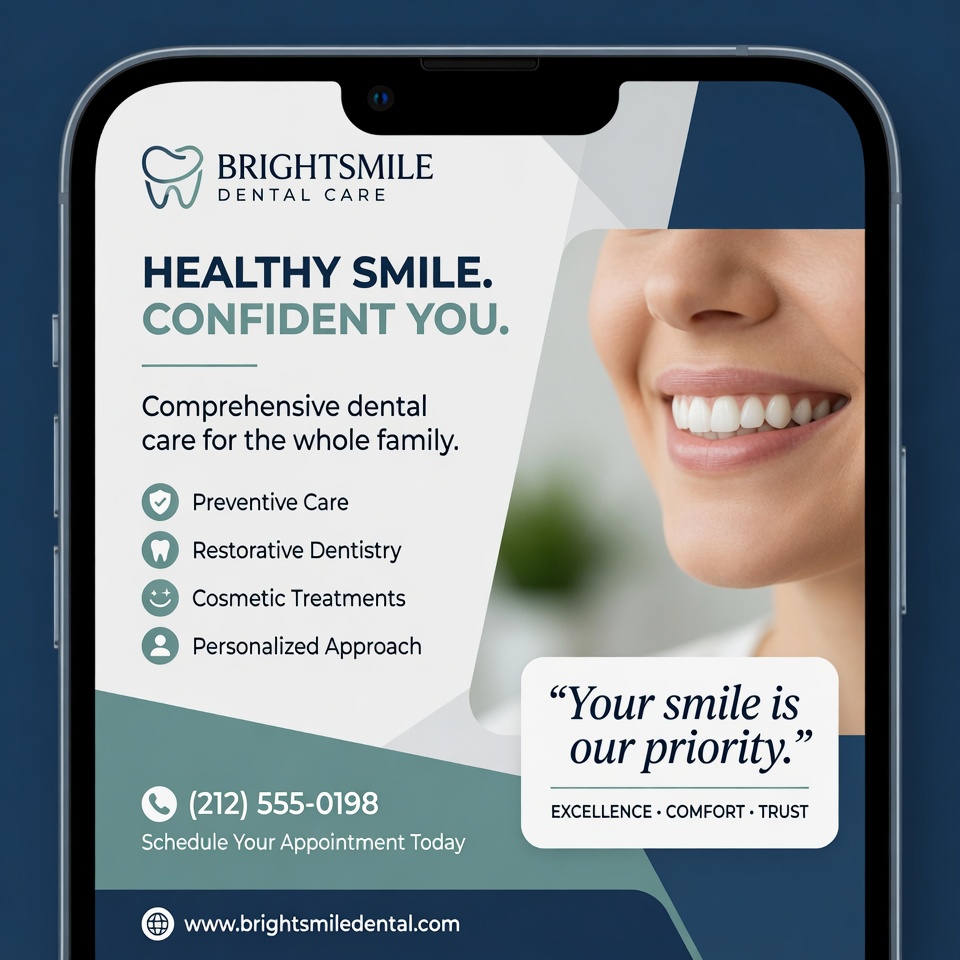
Generic before-and-after images or copy that overpromises send equally fuzzy signals about what the practice actually delivers.
Over months, those blurred inputs shape a less favorable profile of the practice inside the platforms’ models.
The result shows up in two places at once. Ad delivery becomes less efficient because the system has weaker confidence about which users will value the offer. At the same time, the practice’s presence in organic and AI-assisted discovery stays muted, not because the clinical work is weak, but because the signals never gave the platforms a clear reason to amplify it.
A practice running full-arch or Invisalign campaigns feels this most clearly.
If creative uses stock imagery and every inquiry counts the same, the platforms learn that this practice draws high volumes of low-follow-through interest. When the same practice later appears in feed recommendations or AI answers about local providers, the model carries forward that diluted picture.
The cost is not just higher ad prices today. It is slower, less precise visibility across every channel the platforms influence.
Practices that treat signal quality as a core operating discipline are already seeing the difference. They align creative with real patient outcomes, match landing pages tightly to ad promises, and define conversions around patients who book and start treatment.
Each of those choices supplies the platforms with sharper training examples.
The platforms respond by getting better at finding similar patients and surfacing the practice in more relevant contexts without additional spend.
The practices that are still optimizing for volume of inquiries are teaching the opposite lesson. Their signals remain noisy, and the platforms’ growing reliance on those signals turns that noise into a compounding disadvantage across paid and unpaid channels alike.
Executive Takeaway
Dental practices that tighten the full signal chain—from creative to booked patient—will compound advantages as platforms increasingly use ad outcomes to shape broader visibility. Those that continue treating ads as isolated campaigns will find their position quietly weakened by the very data they send.