
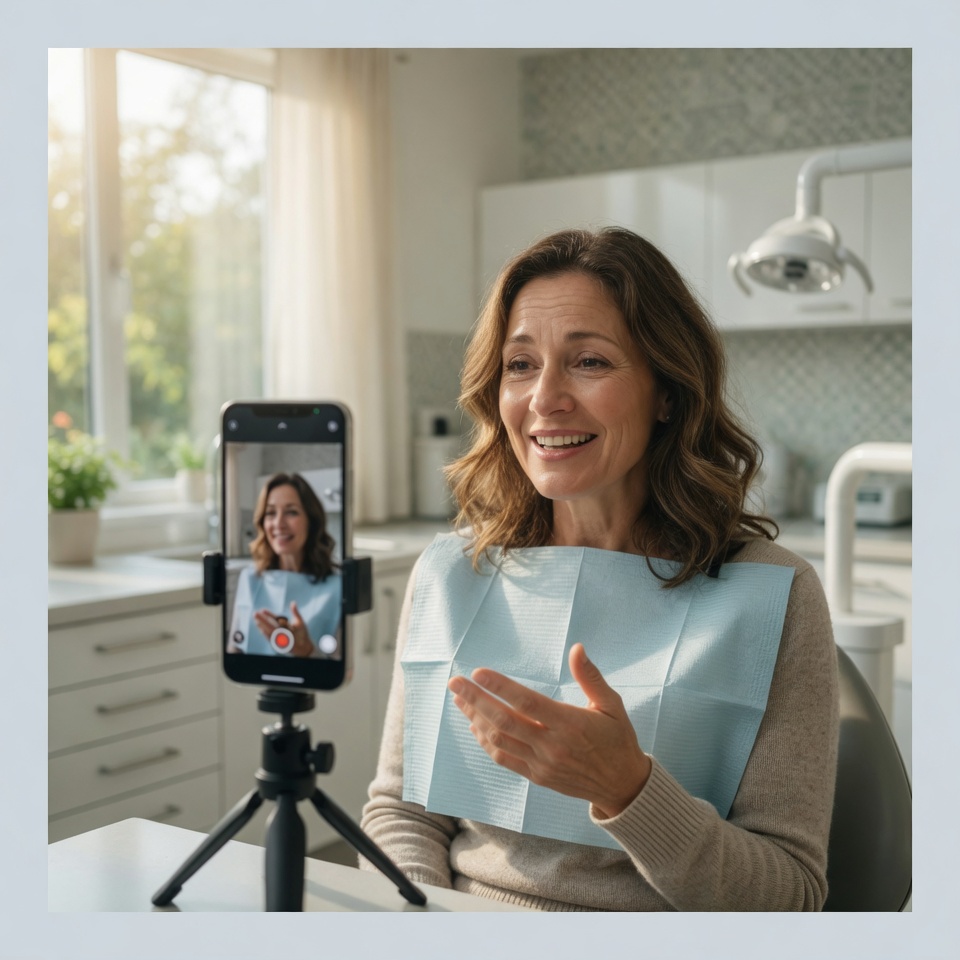
Even photorealistic AI testimonials struggle to match the influence of genuine stories from actual patients and dentists.
Dental practice owners watching today’s AI video tools produce near-flawless patient testimonials and dentist talking-head clips often assume the technology has closed the authenticity gap. Production is faster, cheaper, and the output looks convincing enough to use at scale.
Our own data, plus large-scale consumer research, tell a different story.
In the 2026 State of Video study, 77.9% of consumers said they trust videos featuring real people. Only 3.5% extended the same trust to fully AI-generated videos.
When viewers suspect or detect AI in brand content, 36% report it lowers their perception of the brand.
The most common detection cues – robotic gestures, flat emotional tone, and unnatural delivery – appear even in high-quality generations.
Dentistry magnifies the difference. Patients considering implants, cosmetic work, or care that triggers anxiety are not just evaluating information. They are assessing whether the relief and outcomes described are actually possible.
Real testimonials carry specific, unscripted language and visible shifts in expression that viewers read as earned experience. AI versions tend to feel smoother yet thinner on the details that create conviction.
The pattern shows up across related research.
Human voice-overs in short video ads reduce cognitive load and lift purchase intent compared with AI equivalents.
Human-generated summaries in high-consideration categories produce higher trust and stronger booking intent than AI versions. The same dynamic appears when content must overcome skepticism in a service built on personal trust.
The practical gap surfaces in prospect behavior. Real patient and dentist videos strengthen social proof that moves people from browsing to requesting consultations.
Synthetic stand-ins risk a quiet discount on that proof, particularly once any hint of generation surfaces. In an environment where AI search systems increasingly weigh authentic engagement signals, the difference compounds.
Practices that make simple, consented video capture a routine part of post-treatment or new-patient workflows gain content that performs across their website, social channels, and referral systems. The alternative — defaulting to AI-generated testimonials — saves time on the front end but leaves the heavier lift of building genuine confidence to other, weaker signals.
Executive Takeaway
Authentic videos from real patients and dentists retain a measurable advantage in trust and influence that current AI generations have not closed. The sales data and general research back this up. The learning: Capture genuine stories as standard operating procedure. You can still use AI to scale supporting content, but not to replace the foundation. Humans still prefer humans.