
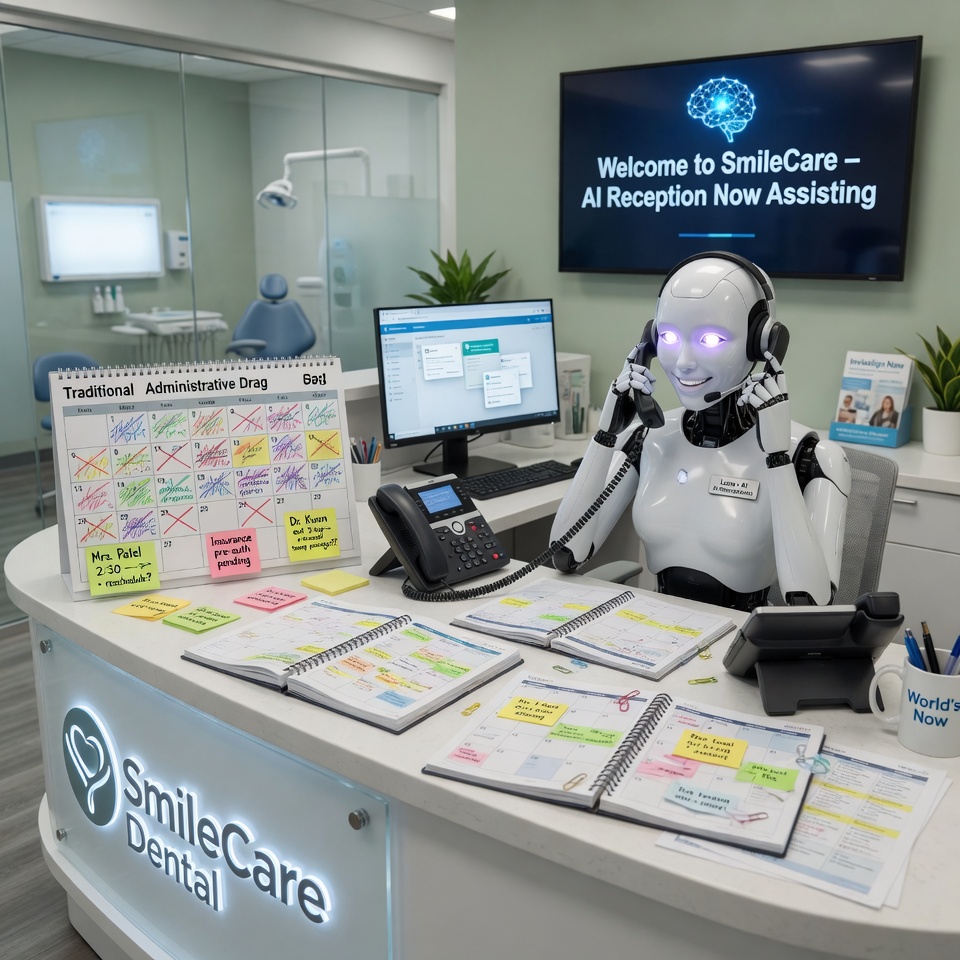
Most forward-thinking dental practices now answer every new-patient call. Yet close rates stay stuck. The gap is simple: AI receptionists and booking agents handle logistics. A true AI sales agent qualifies intent, answers objections, and schedules only patients ready to accept treatment. The difference is worth $250,000+ a year.
[Executive Summary]
- AI receptionists can answer calls and book appointments, but they do not necessarily improve close rates.
- The real gap is qualification: understanding intent, urgency, fit, objections, and readiness before the patient reaches the chair.
- The next layer of AI is not administrative. It is sales-focused: qualify the patient, educate them, and book the right appointment when they are ready to move forward.
- Dedicated AI sales agents qualify every inbound lead in real time, educate on high-value services, and book only committed cases — lifting overall close rates 15–25 points and recovering six-figure production in dental offices.
[What it means for practice owners]
- Do not measure AI success by calls answered or slots filled. Measure booked qualified patients, show rate, treatment acceptance, and production.
- Unqualified appointments can quietly waste chair time, staff time, and marketing dollars.
- High-value services like implants, Invisalign, and cosmetic dentistry need more than fast booking. They need pre-education, objection handling, and the right appointment type.
- The practices that win will use AI to protect the front desk and improve conversion, not just reduce missed calls.
[Story]
The front desk has always carried the heaviest load. Calls arrive at all hours. Staff juggles insurance questions, slot availability, and basic objections while trying to stay warm with every caller.
Many practices still lose 20–35% of potential new patients simply because no one answers or follows up.
AI receptionists changed the math on volume.
Tools now answer 24/7, book cleanings or exams directly into the PMS, verify insurance, and send confirmations. Booking agents stagger schedules, fill cancellations, and cut no-shows. Front desks report less chaos and fewer overtime hours. That part works.
It does not, however, move production.
New patients rarely call for a simple cleaning. They call because a tooth hurts, a smile embarrasses them, or a spouse mentioned implants. Some have coverage questions. Others worry about cost or time. A receptionist agent books whoever asks for an opening. The slot fills. The patient may show up or cancel. Treatment acceptance stays flat at 25–45%, often lower for elective work.
An AI sales agent operates one layer deeper.
It opens the call the same way but then qualifies. It asks about the chief complaint, insurance status, timeline, and budget signals. It explains basic treatment value in plain language. It addresses common objections without diagnosing. Only when the patient signals readiness does it book – a pre-qualified patient.
Early users of these purpose-built agents report measurable lifts.
One multi-location group recovered over $100,000 in production from previously missed calls. Another practice saw quarterly revenue jump 25% and show rates climb from 35% to 60%. The patients who reach the chair already understand the next step.
The hidden cost shows up in the numbers most owners track loosely.
Marketing spend generates leads. Basic AI turns some of those leads into appointments. But without qualification, a sizable share of those appointments either no-show or reject recommended treatment. Chairs stay underutilized. Hygiene and doctor time get consumed by low-value visits. The practice works harder for the same production.
Practices that treat AI as an admin tool stay stuck in the old model.
Those that add a sales layer shift the economics. The agent acts like a trained new-patient coordinator who never takes a day off and follows the exact script owners approve. It frees human staff for high-touch moments – greeting patients in person, answering deeper clinical questions, closing cases chairside.
Implementation stays straightforward. The best agents integrate with existing PMS systems, pull real-time availability, and log every detail for compliance. Owners set guardrails: what questions to ask, what language to use for implants or Invisalign, when to hand off to a human. Updates take minutes, not weeks of retraining staff.
The pattern repeats across the industry.
Receptionist agents solve the phone problem. Booking agents solve the schedule problem. Neither solves the conversion problem.
The sales agent does – by making sure every booked patient is already leaning yes before they ever walk through the door.
Executive takeaway: Stop measuring AI success by calls answered or slots filled. Measure it by new-patient close rate and same-day treatment acceptance.
The practices pulling ahead in 2026 will run both layers of AI: one to keep the front desk calm, the other to keep the schedule profitable. The second layer is where the real money is.