
[Executive Summary]
- Meta platforms deliver the lowest cost-per-lead and broadest local targeting for dental practices, yet their quick-scroll environment produces more surface-level engagement.
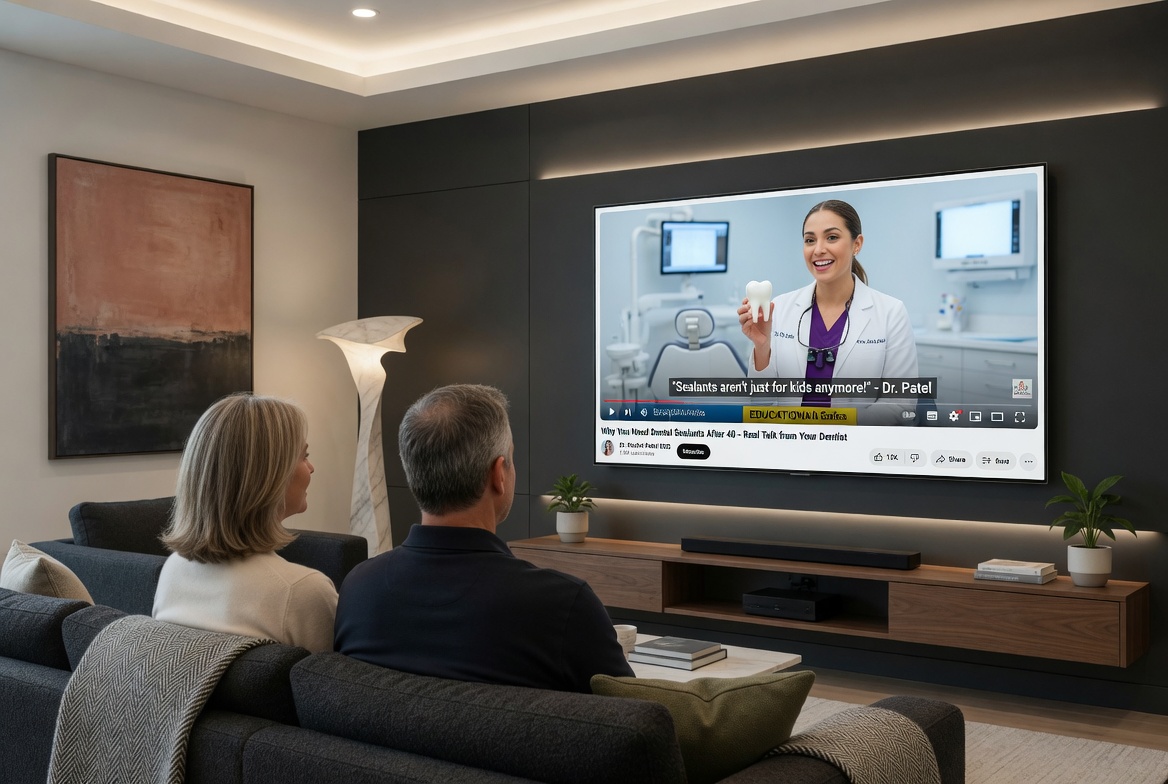
- YouTube reaches 2.7 billion monthly users with deeper watch-time metrics that translate directly into higher treatment acceptance for high-value elective services.
- Patient research behavior favors YouTube for procedure education, while Meta excels at visual awareness and retargeting – leaving most practices stuck splitting budgets without a clear funnel strategy.
[What it means for practice owners]
- Dental practices and implant-focused offices now see Meta CPLs in the $30–$90 range, but conversion to booked consults often lags because patients scroll past ads without engaging.
- Cosmetic and Invisalign-heavy practices gain stronger brand recall on YouTube, where 55% of Gen Z and millennial patients discover healthcare services through educational videos.
- Ad fatigue on Meta is rising; practices that repurpose the same static images or short Reels across Facebook and Instagram report diminishing returns after 6 months.
- YouTube’s lower average CPM of $6–$12, combined with intent-driven search and related-video placement, creates more qualified leads for elective dentistry than Meta’s broader demographic targeting.
- Practices ignoring YouTube miss the second-largest search engine, where patients already type “does Invisalign hurt” or “implant recovery timeline” before they ever see a Meta ad.
[Story]
The numbers look simple at first glance. Meta still commands 39% of social ad spend and projects $243 billion in worldwide ad revenue for 2026, overtaking Google for the first time. Facebook and Instagram together reach more than 3 billion monthly active users. YouTube sits at 2.7 billion. On paper, Meta wins reach.
Yet dental practices that track actual patient journeys tell a different story. When someone needs $5,000 worth of implants or clear aligners, they do not scroll for inspiration. They search. They watch. They pause. YouTube captures that exact moment.
Meta platforms shine at the top of the funnel.
A well-targeted carousel ad featuring before-and-after smiles, or a 15-second Reel showcasing a patient’s newfound confidence, can generate impressions cheaply. Cost-per-click on Meta averages $0.50–$1.50. Local-radius targeting remains unmatched for filling hygiene chairs or pediatric slots. Many practices still pull $25–$75 leads on Facebook and Instagram for general dentistry.
But those leads often sit in the inquiry stage longer. Patients click, fill a form, then ghost. The quick dopamine of likes and comments does not equal commitment when the treatment plan involves drilling or months of trays.
YouTube operates in the consideration stage.
A 60-second explainer on “what to expect after implant surgery” or a two-minute patient testimonial keeps viewers engaged. Average view rates and watch-time metrics on YouTube ads outperform Meta’s short-form video in direct correlation to booked consults. Practices running TrueView for Action or non-skippable in-stream ads report higher-quality inquiries because viewers have already invested attention.
Engagement looks different, too.
On Facebook and Instagram, engagement means likes, saves, and comments – useful signals, but often driven by emotional reactions to pretty smiles rather than informed decisions. YouTube measures seconds watched. A patient who watches 70% of a three-minute video on sedation dentistry has self-qualified. That viewer is far more likely to schedule than the one who double-tapped a Reel and kept scrolling.
Cost data reinforces the split.
YouTube’s average CPC sits between $0.30 and $1.20 – often lower than Meta for video placements. ROAS on Meta averages 4.2x across industries, strong for direct response. YouTube delivers 3.4x but with higher lifetime value per patient because the trust built through education reduces price shopping and no-shows.
Dental-specific benchmarks from 2025–2026 campaigns show the pattern clearly. Implant and cosmetic practices allocating 60% or more to YouTube see 20–30% higher conversion from ad to treatment plan acceptance than Meta-only budgets.
Family practices leaning on Meta maintain steady new-patient flow for cleanings and basic restorative work but struggle to upsell elective services without supplemental video education.
The hidden cost shows up in creative fatigue.
Meta algorithms reward fresh creative every 4-6 weeks. Practices without in-house video teams burn budget refreshing static posts or short Reels. YouTube rewards consistency in topic and quality. One well-produced explainer series on root canals or whitening can run for months, gaining organic search traffic long after the ad spend ends.
Patient demographics add nuance.
Facebook still skews older – 30 to 65 – perfect for family dentistry and implant cases. Instagram pulls younger cosmetic shoppers who respond to aesthetic Reels. YouTube spans all ages and reaches them during intentional search or related-video sessions. A 45-year-old researching Invisalign after seeing a Meta ad often ends up on YouTube anyway to verify.
Smart dental practices no longer treat the platforms as rivals.
They use Meta to fill the awareness bucket and drive initial traffic, then retarget those users on YouTube with longer educational content. The same video asset created for YouTube Shorts can be repurposed as Instagram Reels, but the long-form version stays on YouTube to capture the deeper funnel.
YouTube = higher acceptance rates.
Meta remains the volume leader for local lead generation. But the practices quietly moving 30–40% of their ad budget to YouTube are seeing higher treatment acceptance rates and stronger patient loyalty. Those patients arrive already educated, less price-sensitive, and more likely to refer friends who watched the same videos.
Like buying a car.
The old model – post pretty smiles on Instagram, boost the post, hope for calls – worked when competition was lower. The new reality is patients who research procedures are like consumers buying a car. They compare options, watch multiple angles, and decide based on perceived expertise.
Dental practices that keep treating advertising as a reach game will keep paying for clicks that never convert. The ones that treat it as a trust-building exercise will allocate dollars where patients actually pause, learn, and decide.
The quiet signal is clear. Reach still matters. But influence now belongs to the platform where patients choose to watch, not scroll. YouTube did not overtake Meta in total ad spend this year, but for elective dental services, it is already winning the patient’s attention where it counts most – right before they book.