
[Story Summary]
- Google’s recent core algorithm updates and AI Overviews have fundamentally shifted dental search rankings, penalizing high-volume generic content in favor of verifiable E-E-A-T signals like verified reviews, clinician credentials, and clinical proof.
- By surfacing authenticated patient outcomes and highly rated local practices, modern search engines reduce consumer friction and instill the trust necessary for patients to commit discretionary income to high-ticket, elective healthcare services.
- This shift disrupts traditional SEO content-farming strategies, forcing DSOs and independent practices alike to reallocate marketing resources toward local review management, structured schema data, and authentic media to maintain visibility in AI-driven search results.
[What it means for practice owners]
- Direct Boost to High-Margin Electives: Transitioning your digital footprint toward procedure-specific reviews and verified before-and-after galleries will directly accelerate case acceptance for lucrative, out-of-pocket services like dental implants, Invisalign, and cosmetic veneers, maximizing returns without increasing ad spend.
- Reallocation of Marketing Capital: Budget allocated for outsourced, generic blog writing should be immediately redirected toward internal workflows that capture patient reviews, structured video testimonials, and clinician-authored case studies to avoid dropping out of local map packs.
- Leveling the DSO vs. Independent Playing Field: Large corporate networks can no longer dominate search through sheer domain authority and national content footprints; agile independent practices that optimize localized, authentic E-E-A-T signals can effectively outrank corporate competitors in their immediate markets.
*E-E-A-T signals = Experience, Expertise, Authoritativeness, and Trustworthiness
[Story]
Google’s latest algorithm refinements have quietly redrawn the rules of visibility for dental practices nationwide. Where once a steady stream of keyword-rich blog posts could propel a site to the top of local search results, today’s winners are those who supply tangible proof that they deliver results patients can see and trust.
The pivot began gaining momentum after Google’s March 2025 core update and accelerated through follow-on changes into early 2026. Search engineers explicitly strengthened evaluation of Experience, Expertise, Authoritativeness, and Trustworthiness – collectively known as E-E-A-T—for all “Your Money or Your Life” categories, including dental care. Practices that flooded their sites with AI-generated or recycled informational articles on topics such as “five tips for healthy gums” watched traffic evaporate. Meanwhile, clinics that embedded patient testimonials, before-and-after galleries, detailed clinician biographies, and treatment-specific reviews climbed in both Google Maps packs and AI-generated answer boxes.
The End of the Content Arms Race
For years, dental marketing agencies urged practices to publish weekly blog posts to feed Google’s appetite for fresh material. That strategy has collapsed. Industry analysts tracking visibility after the 2025 updates report that generic dental content now ranks below practices offering original case studies and real-world outcomes. One multi-location DSO in the Midwest that cut its monthly blog output by 70% while adding 200 verified patient reviews and schema-marked procedure pages saw organic traffic rise more than 40% within 3 months.
The reason is straightforward. Modern search – especially Google’s AI Overviews and third-party tools like ChatGPT – does not simply match keywords. It evaluates whether a source demonstrates lived expertise. A dentist who has placed 1,200 implants and shares anonymized outcomes, complete with patient consent and follow-up notes, earns algorithmic trust that no amount of 800-word “what to expect from Invisalign” posts can replicate.
Proof Becomes the New Ranking Signal
Nowhere is the shift more visible than in local search, where the majority of dental patient journeys begin. Google Business Profile data now carries heavier weight than ever. Practices that actively solicit, respond to, and categorize reviews by procedure – Invisalign, same-day crowns, dental implants – outperform competitors whose profiles contain only generic five-star praise for “friendly staff.” Recent consumer surveys confirm that 68% of patients will skip a listing with fewer than 20% reviews or a rating below 4 stars, even if it sits higher in traditional map results.
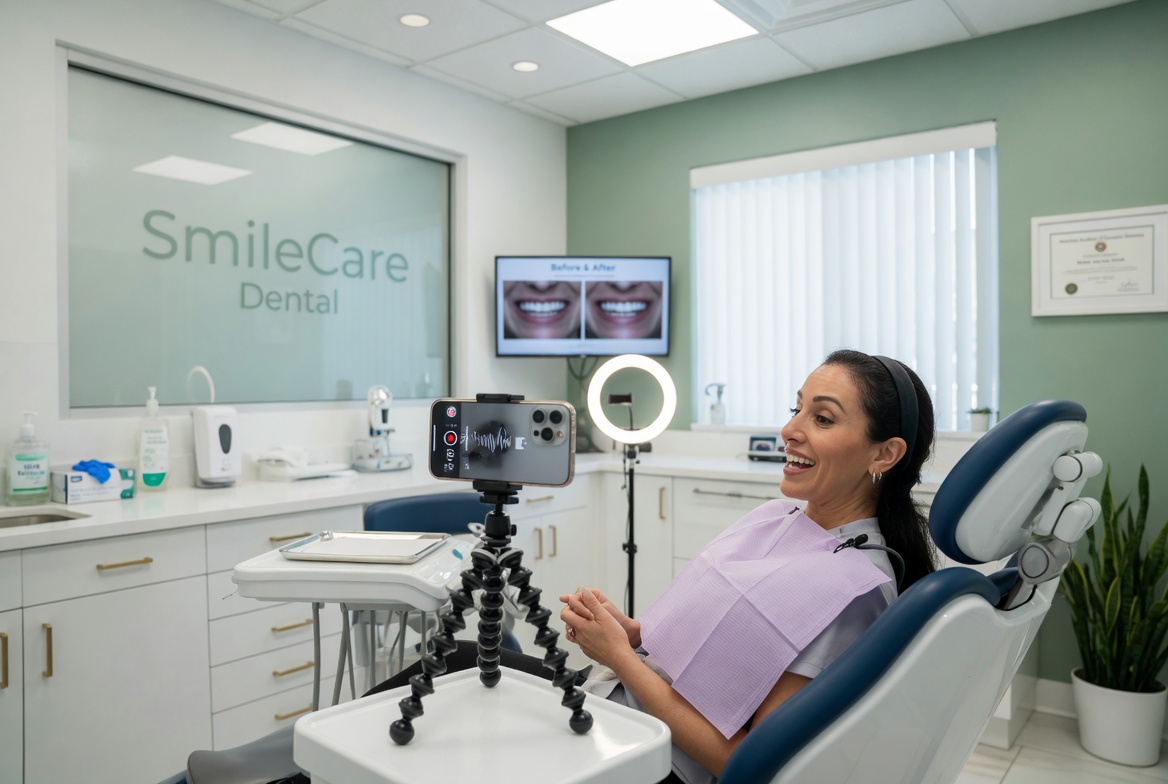
Visual proof has emerged as an equally potent lever. High-resolution before-and-after photographs, time-lapse treatment videos, and 360-degree office tours serve dual purposes: they reassure anxious patients and supply Google with the rich media signals its AI systems use to judge authenticity. Practices that upload weekly fresh images tied to specific services report higher click-through rates from both search and AI recommendations.
Local Authority Outweighs National Reach
The changes have leveled the playing field between independent practices and large DSOs. National chains once dominated through sheer content volume and paid links. Today a solo practitioner in St. Pete, Florida, who maintains an active review-response cadence, posts quarterly community-health updates authored by the lead dentist, and includes board-certification badges on every service page can consistently outrank a corporate neighbor with deeper pockets but thinner proof.
Regulatory and insurance pressures have amplified the trend. With more patients shifting toward high-deductible plans that emphasize out-of-pocket elective care, practices must convert browsers into bookers faster than ever. Trust signals shorten that journey. A patient researching “best dentist for veneers near me” who encounters a profile rich in verified cosmetic outcomes is far more likely to schedule than one who lands on a page stuffed with SEO-optimized but unproven claims.
What Happens Next
Google has signaled no reversal. Internal guidelines continue to reward sites that demonstrate ongoing patient engagement and clinical transparency. Practices ignoring the shift risk becoming invisible not only in traditional search but in the AI assistants patients now consult first. Early adopters who treat every review, every credentialed bio, and every authentic outcome as core infrastructure report steadier new-patient pipelines and higher case acceptance for elective procedures.
The message is clear: in dental SEO, content still matters, but only when it is anchored in proof that patients – and algorithms – can verify.